

January - July 2024
UX Researcher | Product Designer
E-commerce | Marketplace

The research uncovered several factors that directly impact fee acceptance.
Users were unable to clearly explain what the “OLX Guarantee” was and struggled to connect the fee to its benefits. This pattern consistently appeared in qualitative studies with groups of 6 to 20 users.
Many associated the guarantee with product warranty or product quality, while the actual value was in mediation and refund protection.
Refunds, for example, were often seen as a basic consumer right, reducing willingness to pay.
Users evaluated product price, shipping, and fee together, and were more likely to accept the fee for higher-value or higher-risk items.
Discovering the additional cost late in the journey led to frustration and a perception of lack of transparency.

With insights spread across the journey, it became necessary to structure the problem more systematically.To achieve this, I created an end-to-end service blueprint covering:
- discovery
- decision
- payment
- delivery
- post-purchase
This artifact made it possible to visualize how friction points were connected and revealed that the main issues were not limited to checkout, but extended into delivery and post-sales.
It also exposed a misalignment between the promise of the guarantee and the actual experience when users needed to rely on it.
Perceived value is not defined at the moment of payment, it is validated throughout the entire experience.
This blueprint helped align multiple squads and reframed the problem from a UI issue to a systemic experience challenge.

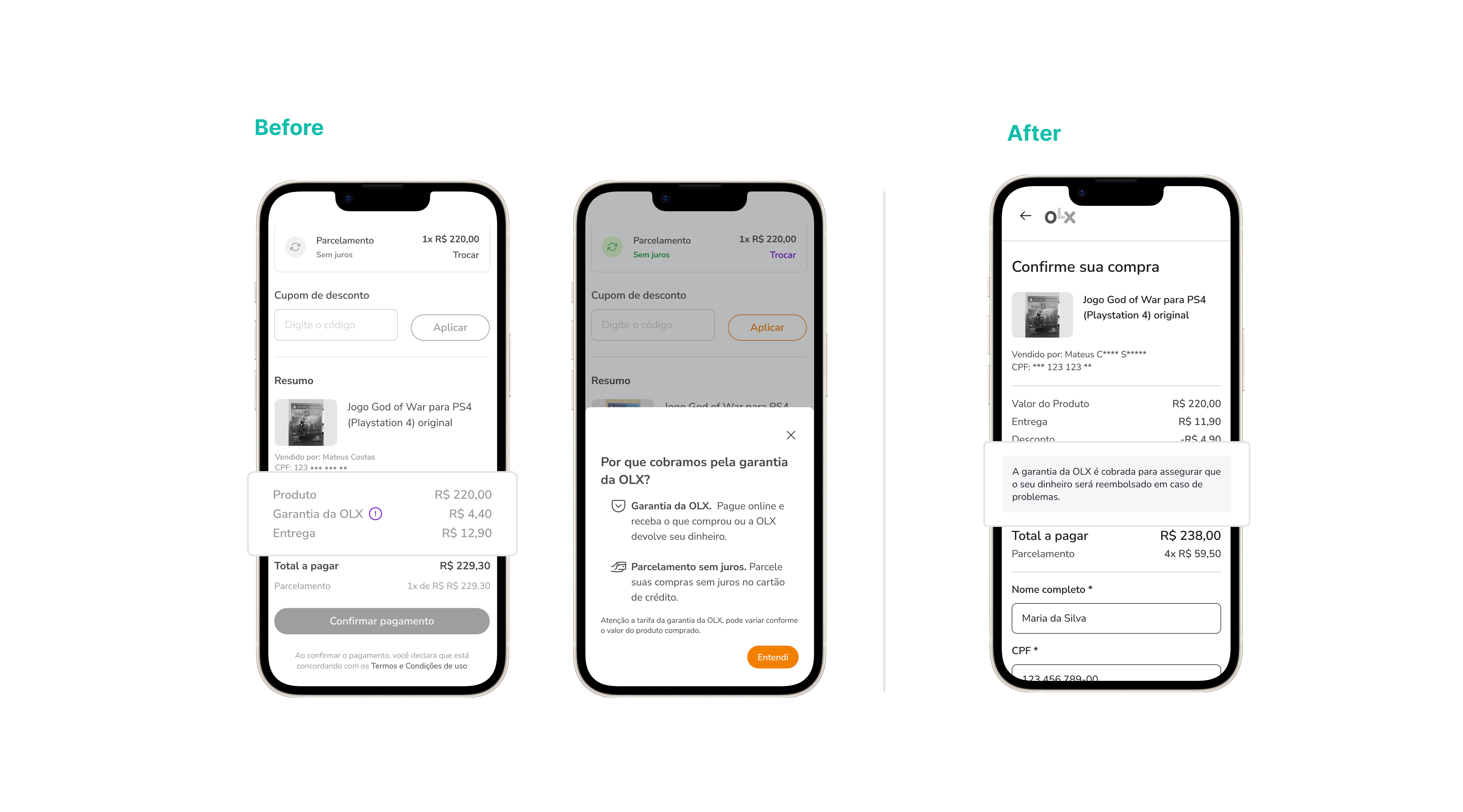
The first experiment focused on improving the explanation of the guarantee in the checkout flow. Previously hidden in a low-visibility modal, the explanation was brought directly into the main flow.
As a result, around half of users were able to correctly explain the concept, based on quantitative data. This indicated that the issue was related to visibility and communication rather than naming, leading to the decision not to rename the feature again.
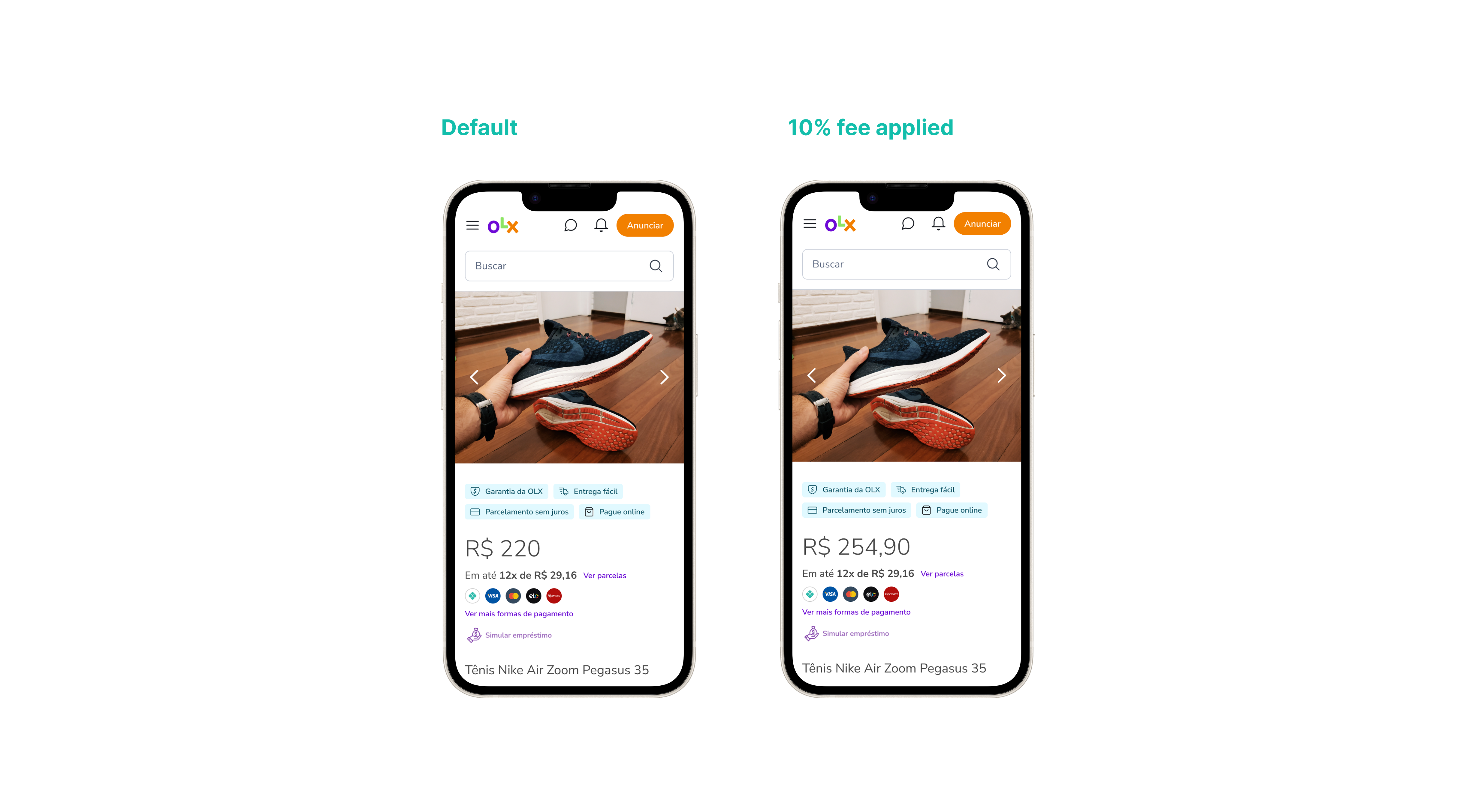
The second experiment tested embedding the fee into the product price. In qualitative research, this approach was perceived by users as a better experience, as it eliminated surprises at checkout and made the final price clear from the beginning.
However, A/B test results showed a drop in conversion. Users were less likely to click on ads with the embedded fee, likely because the higher upfront price made listings appear more expensive compared to others.
This indicates that while transparency improved the experience later in the journey, it negatively impacted initial consideration, demonstrating that surfacing the full cost earlier can reduce engagement when perceived value is not yet established.
From Adview to Checkout:
-3,8% web;
-8,5% mobile.
From Adview to Created transaction:
-6% web;
-10% mobile.
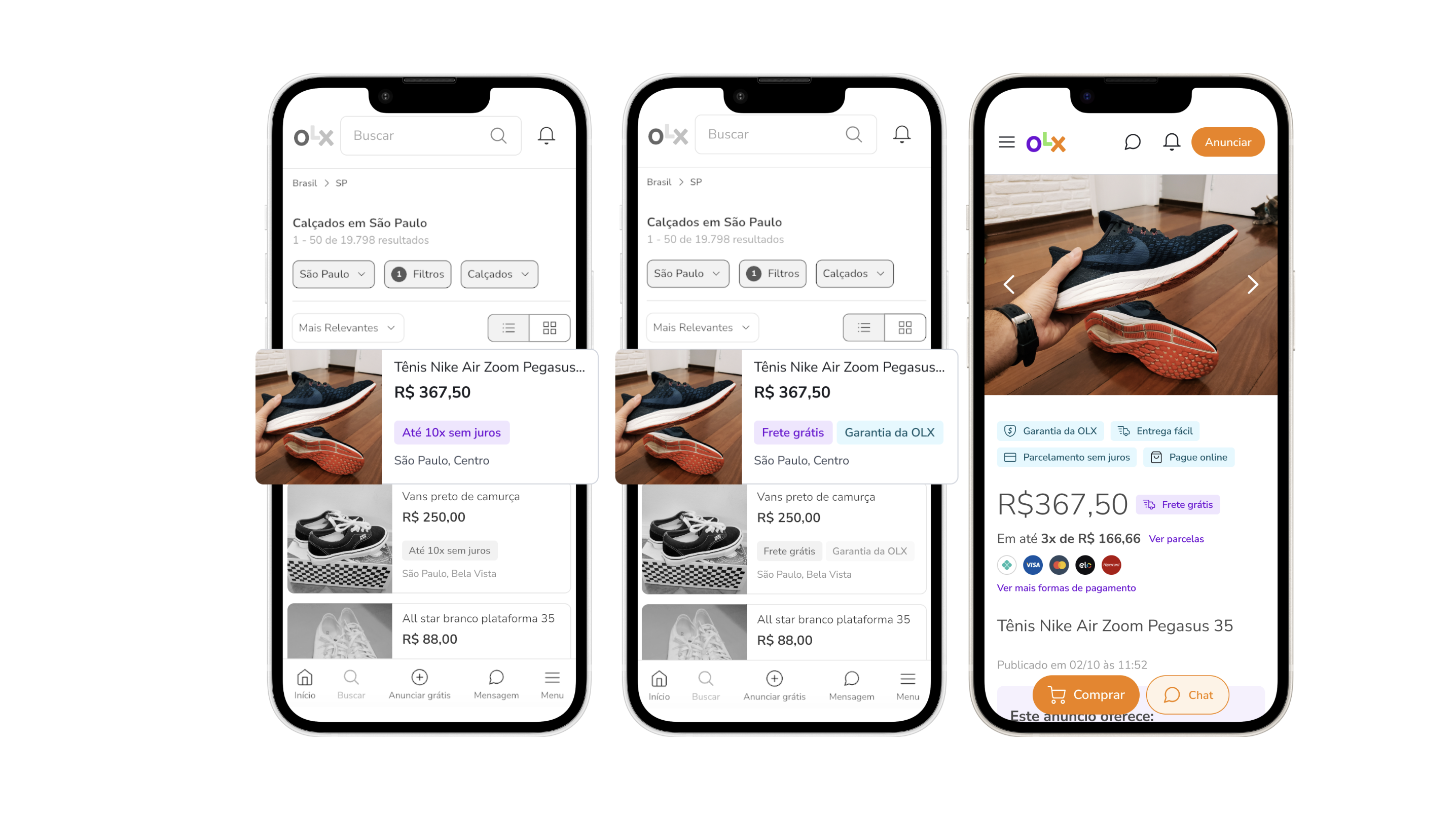
The third experiment introduced benefits such as free shipping and interest-free installments. This led to a significant increase in transactions, doubling weekly volume during campaigns. This reinforced that users do not pay for the fee itself, they pay for perceived value.
With the free shipping campaing and 10x installments the trasaction doubled from 6k/week> 36k/week.
At the product level, this work contributed to increased transactions and more informed decision-making, avoiding unnecessary structural changes and focusing efforts on improving perceived value.
At the organizational level, research insights revealed critical gaps in the post-sales experience, particularly around dispute resolution and refunds. This led to the creation of a dedicated post-sales squad.
Additionally, findings influenced prioritization in other areas such as delivery and customer support, reinforcing the need for an integrated, end-to-end experience.
From the user’s perspective, product, delivery, and support are part of a single journey.
Introducing a buyer fee is not just a pricing decision, it is a fundamental shift in the user experience.The learnings showed that superficial changes, such as renaming or adjusting price visibility, are not sufficient to sustain monetization.
Acceptance depends on the combination of clarity, perceived value, and reliability across the entire journey.Monetization is not a standalone feature, it is the result of a consistent and trustworthy experience.
Next steps include improving experience reliability, especially in delivery and post-sales, exploring more adaptive pricing models by category, and further measuring the relationship between user understanding and conversion.